



04 Mar Private Access vs Public Luxury: What Money Can’t Buy Online
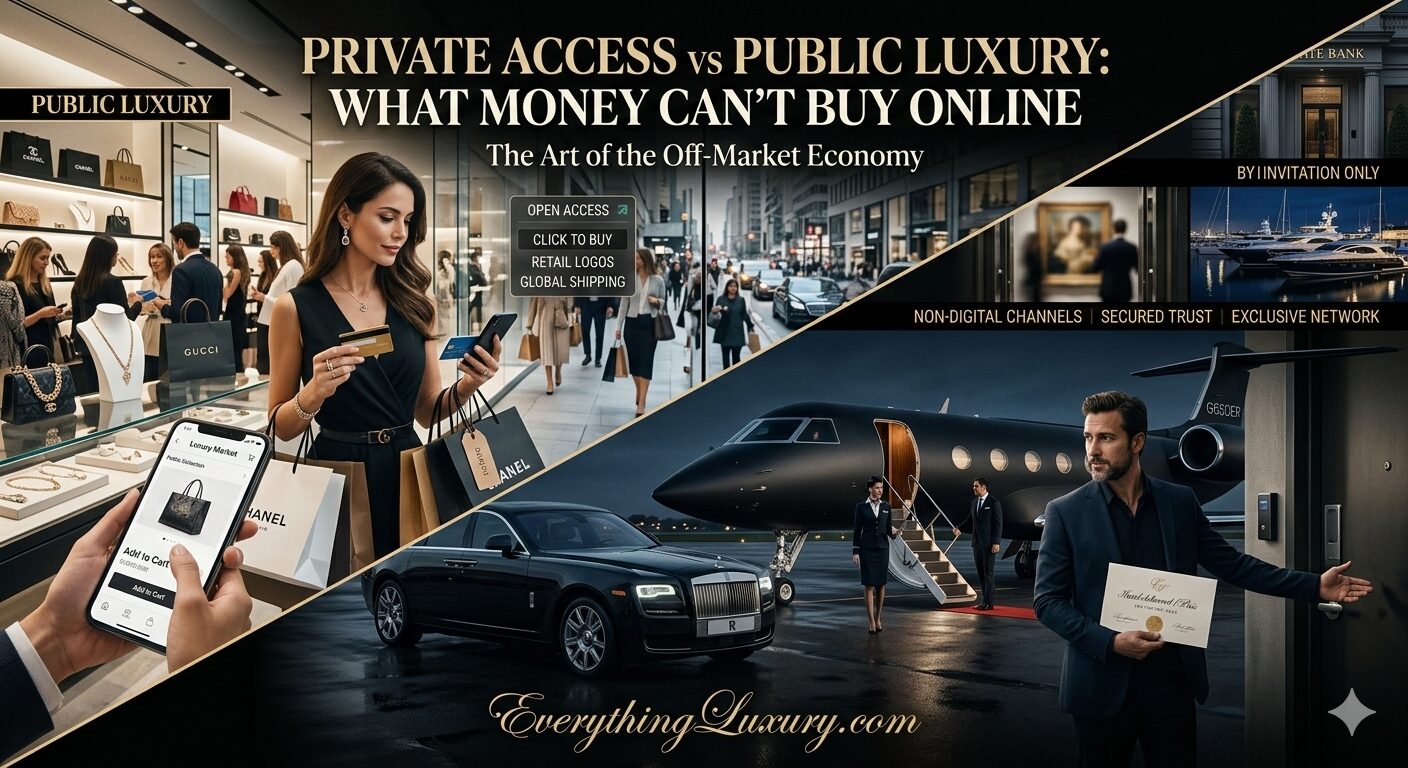
Private Access vs Public Luxury: What Money Can’t Buy Online
Most people believe luxury is a price point.
We know it is a permission structure.
The internet sells expensive things.
Private networks distribute rare things.
That difference separates affluent consumers from true ultra-high-net-worth participants. At scale, wealth stops competing for inventory and begins receiving offers.
Public luxury is discovery.
Private luxury is selection.
The Internet Created Visible Luxury — Not Exclusive Luxury
Online platforms expanded access to premium brands. You can browse collections, configure products, and request availability instantly.
For example, a buyer can explore models through the official configurators at Bugatti or Koenigsegg. The experience feels elite — yet it remains retail.
Manufacturers like Bugatti and Koenigsegg allocate their rarest vehicles privately long before public announcements.
The public sees the catalog.
Collectors receive the phone call.
Money opens the door.
History determines whether you enter.
Real Estate Above a Certain Level Is Never Listed
At mainstream price points, marketing creates value.
At trophy price points, discretion protects value.
Global brokerage networks such as Sotheby’s International Realty and Christie’s International Real Estate circulate elite properties internally before publication. Their public portals — Sotheby’s luxury homes and Christie’s property collection — represent only a curated fraction of actual inventory.
Many estates intentionally avoid exposure for:
-
security
-
reputation
-
negotiation leverage
-
family privacy
Often fewer than three qualified buyers ever tour the property.
When a home appears online, it is entering the broader market — not the primary one.
Private Aviation Operates on Priority, Not Payment
Anyone can request a charter.
Not everyone receives an aircraft.
Membership platforms such as NetJets and VistaJet provide public information at NetJets fractional ownership and VistaJet global fleet.
However, fleet allocation depends on relationship tier and operational priority.
Two passengers may pay identical hourly rates.
Only one receives guaranteed lift.
Private aviation is not a transportation purchase — it is a capacity agreement.
Yachts Are Sold Before They Exist
Brokerage listings show boats.
Shipyards distribute ownership.
Builders like Feadship and Lurssen introduce projects privately years before launch. Their public project galleries — Feadship fleet portfolio and Lürssen yacht projects — display vessels already placed with owners.
Public availability signals secondary circulation.
Private introduction signals primary ownership.
Watch Collecting Is Reputation-Based
Luxury watches appear purchasable online through Patek Philippe collections or Audemars Piguet models.
Yet collectors know allocation governs access.
Manufacturers like Patek Philippe and Audemars Piguet offer rare pieces only to clients who protect long-term brand value.
You do not ask for the watch.
The brand decides whether you should own it.
Hotels Maintain Invisible Inventory
Booking engines display availability.
Concierge channels reveal availability.
Hospitality groups such as Aman Resorts and Rosewood Hotels & Resorts keep villas and residences unlisted even though guests browse rooms at Aman reservations and Rosewood booking.
These accommodations remain reserved for:
-
returning principals
-
family offices
-
trusted advisors
-
long-standing guests
Online inventory rarely reflects true capacity.
Art Markets Finalize Publicly — Trade Privately
Auctions appear to create demand.
They actually confirm prior negotiations.
Before reaching Phillips Auction House — previewed at Phillips upcoming auctions — major works circulate quietly among collectors.
If declined, they enter the catalog.
Public buyers see opportunity.
Private buyers saw option.
The Psychology of Non-Discoverable Ownership
The highest form of luxury is not rarity.
It is invisibility.
When assets cannot be searched, they cannot be compared.
When they cannot be compared, price loses importance.
Ultra-wealth preservation depends on avoiding commoditization.
Visibility creates comparables.
Privacy eliminates them.
Why UHNW Individuals Avoid Public Platforms
Public markets create friction:
-
bidding competition
-
valuation pressure
-
unwanted exposure
-
transactional inefficiency
Private networks create certainty:
-
verified counterparties
-
negotiated outcomes
-
confidentiality agreements
-
predictable execution
At scale, efficiency outranks savings.
How Private Access Actually Works
Every off-market transaction follows a similar structure:
-
Introduction
-
Credential verification
-
Quiet presentation
-
Negotiation
-
Silent transfer
No marketing campaign.
Ownership transfers before the public knows the asset existed.
The Internet Is Only the Signal
Websites reveal taste.
Relationships deliver ownership.
Public luxury shows what exists.
Private luxury determines who qualifies.
For deeper market behavior insights:
https://www.theinsidersviews.com/search/label/SEO
Private Opportunity Access — Lead Capture
We maintain confidential relationships across:
-
real estate
-
aviation
-
yachts
-
collectibles
-
development opportunities
If you are seeking assets not publicly marketed, submit a discreet inquiry at:
https://www.everythingluxury.com
Qualified requests receive introductions before publication — and often before announcement.
Because at the highest level of wealth,
you don’t find luxury.
Luxury finds you.